Navigating the Labyrinth of Longevity: A Comprehensive Guide to Dipeptide Diaminobutyroyl Benzylamid
· As a chemical researcher deeply immersed in the intricate world of bioactive compounds, I often find myself pondering the delicate balance between scientific innovation and practical application. Today, our focus turns to a fascinating molecule that has captured significant attention in the anti-ageing discourse: Dipeptide Diaminobutyroyl Benzylamide Diacetate, more widely recognized by its trade name, Syn-Ake. While its moniker might evoke a certain apprehension, conjuring images of venomous serpents, a closer scientific inspection reveals a marvel of biomimicry. This essay aims to demystify this potent peptide, offering a rigorous guide to its optimal handling and use, grounded in chemical principles and empirical data.
· I. Exclusive Revelation: Unpacking the "Snake Venom" Peptide
· Let us begin by dissecting the essence of this enigmatic compound.
· A. The Ascendant Anti-Ageing Sensation: Dipeptide Diaminobutyroyl Benzylamide Diacetate (Syn-Ake) – A Grand Introduction
· Despite its intimidating nomenclature, Dipeptide Diaminobutyroyl Benzylamide Diacetate is not derived from actual snake venom. Rather, it is a sophisticated synthetic peptide, meticulously engineered to mimic a specific neurotoxin, Waglerin-1, found in the venom of the Temple Viper ( Tropidolaemus wagleri). This synthetic tripeptide is designed to replicate the muscle-relaxing effects of its natural counterpart without any of the inherent dangers associated with true toxins. In essence, it functions as a "gentle Botox replacement" – a testament to the power of biomimetic chemistry. Its primary allure lies in its ability to transiently "relax" facial muscle contractions, thereby attenuating the appearance of expression lines and contributing to a more youthful visage.
· B. The Pervasive Moniker: Why "Topical Botox"?
· The appellation "topical Botox" is not mere marketing hyperbole but reflects a fundamental similarity in action, albeit with crucial differences in invasiveness and systemic effect. The prospect of achieving smoother skin, free from dynamic wrinkles, without resorting to injectables or surgical intervention, is undeniably compelling. This peptide offers a non-invasive pathway to addressing visible signs of aging, making it a highly desirable component in modern dermatological formulations.
· II. Genesis and Journey: From Ophidian Inspiration to Your Cosmetic Arsenal
· The story of Dipeptide Diaminobutyroyl Benzylamide Diacetate is a compelling narrative of scientific observation, synthetic ingenuity, and dermatological application.
· A. The Serpent's Revelation: A Spark of Innovation
· The genesis of this peptide lies in the astute observation of natural biological mechanisms. Scientists, studying the Temple Viper, identified Waglerin-1, a peptide within its venom known for its muscle-inhibiting capabilities. This discovery served as a profound inspiration. The challenge then became: could we, through synthetic organic chemistry and biotechnology, create a safe, stable, and efficacious analogue that harnesses this muscle-relaxing property for cosmetic benefit? The answer, embodied in Dipeptide Diaminobutyroyl Benzylamide Diacetate, was a resounding yes, yielding a safe and effective "snake venom mimic" for cosmetic applications.
· B. The Unravelling of Wrinkles: A Mechanistic Insight
· How, precisely, does this peptide contribute to the "disappearance" of wrinkles? Its mechanism of action is elegant and targeted. Dipeptide Diaminobutyroyl Benzylamide Diacetate functions as a reversible competitive antagonist of muscle-type nicotinic acetylcholine receptors (nAChRs) at the neuromuscular junction. Consider it a molecular "traffic cop": by selectively binding to these receptors, it temporarily obstructs the binding of acetylcholine – the neurotransmitter responsible for transmitting signals from nerve cells to muscles, initiating contraction. This temporary inhibition prevents nerve impulses from fully triggering facial muscle contractions, leading to a palpable relaxation of the musculature. When nAChRs are blocked, the essential influx of sodium ions is impeded, preventing depolarisation and ultimately inhibiting nerve excitation transmission. The effect is localised, reversible, and does not involve systemic absorption or widespread pharmacological action, a key distinction from injectable neurotoxins.
· The empirical evidence supporting its efficacy is robust. Studies have indicated a measurable reduction in wrinkle depth within as little as 15 minutes post-application. More substantial and sustained improvements are typically observed after four weeks of continuous use, with clinical trials demonstrating significant reductions in wrinkle depth, volume, and number. Some manufacturer-conducted in-vivo studies even report a reduction in wrinkle depth of up to 25% over four weeks of continuous use, with peak improvements reaching up to 52% with a 4% concentration used for 28 days.
· III. The Sagacious User's Compendium: Maximising the "Snake Venom" Peptide's Potential
· To truly harness the benefits of Dipeptide Diaminobutyroyl Benzylamide Diacetate, one must navigate its intricacies with knowledge – from procurement to preservation and application.
· A. The Analytical Gaze: Dipeptide Diaminobutyroyl Benzylamide Diacetate's "Identity" and "Compositional Blueprint" (Specifications)
· Understanding the fundamental characteristics of this peptide is paramount for both formulators and informed consumers.
· INCI Name & CAS Number: For the discerning individual, the INCI (International Nomenclature Cosmetic Ingredient) name, Dipeptide Diaminobutyroyl Benzylamide Diacetate, and its unique CAS number, 823202-99-9, serve as its unambiguous identifier. These are the chemical fingerprints ensuring authenticity and adherence to international standards. The molecular formula, often cited as C24H36N6O6 (or C19H29N5O3 for the core peptide, with diacetate groups enhancing solubility and bioactivity), underscores its synthetic complexity.
· Purity Unveiled: Purity, typically determined by High-Performance Liquid Chromatography (HPLC), commonly ranges from ≥95.0% to ≥98.0%, with some specialised suppliers offering >98%, 99%, or even 99.99%. It is important to recognise that while high purity is generally desirable, the optimal grade for a cosmetic application might be balanced against cost and specific formulation requirements, not always demanding the absolute highest possible purity.
Test Items | Specifications | Results |
Appearance | White to off-white powder | Conforms |
HPLC Identification | Consistent with the reference substance main peak retention time | Conforms |
Purity | ≥ 98.0% | 98.7% |
Peptide content | ≥ 80.0% | 85.4% |
Water content | ≤ 8.0% | 3.4% |
Acetic acid content | ≤ 15.0% | 9.5% |
Lead (Pb) | ≤ 10 mg/kg | Conforms |
Arsenic (As) | ≤ 2 mg/kg | Conforms |
Cadmium (Cd) | ≤ 5 mg/kg | Conforms |
Mercury (Hg) | ≤ 1 mg/kg | Conforms |
Aerobic bacterial count | ≤ 1000 CFU/g | Conforms |
Moulds and yeast count | ≤ 100 CFU/g | Conforms |
· Recommended Concentration: The effective concentration for cosmetic applications is a frequent query. Research indicates that products containing approximately 0.2% of the peptide can yield visible improvements in skin structure. However, in solution, recommended use levels in final formulations typically range from 0.005%–1%, 0.1-1%, or more commonly, 1-4% of a stock solution. This translates to roughly 5 to 5000 ppm (parts per million) in the final product (0.0005% to 0.5%). This variability highlights the importance of consulting manufacturer guidelines for specific raw material forms.
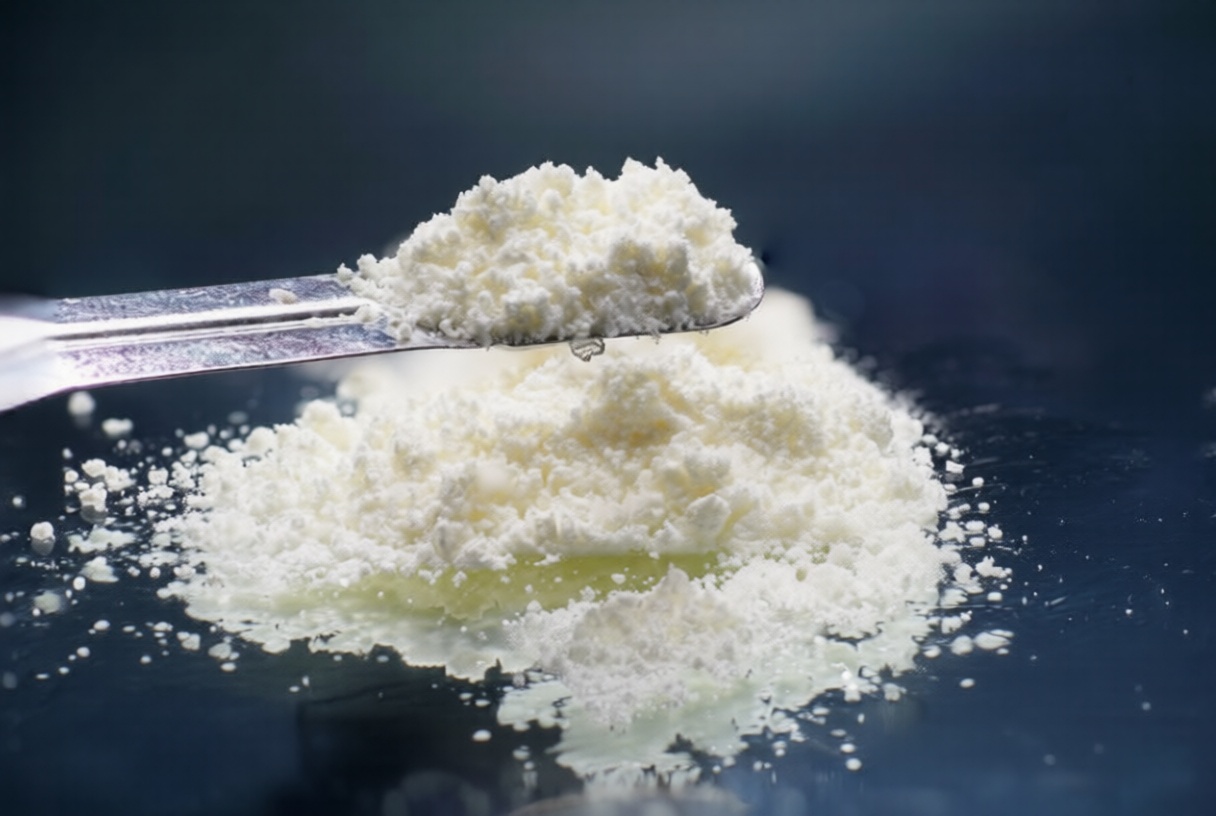
· Physical Manifestation: Dipeptide Diaminobutyroyl Benzylamide Diacetate can present as a white to off-white hygroscopic powder or, more commonly in cosmetic applications, as a colorless clear viscous liquid solution (often in a glycerin/water base). The physical form dictates specific handling and storage protocols.
· B. The Sanctuary of Stability: Dipeptide Diaminobutyroyl Benzylamide Diacetate's "Environmental Demands" (Storage Conditions)
· The stability and efficacy of this peptide are profoundly influenced by its storage environment. Chemical degradation pathways, often accelerated by heat, light, and moisture, necessitate stringent controls.
· The Powder's Cryogenic Chamber: For the pure powder form, optimal long-term preservation demands exceptionally low temperatures and stringent protection from moisture. Storage at -80°C can extend its stability for up to 2 years, while -20°C offers a respectable 1-year shelf life. Sealed, moisture-free conditions are non-negotiable.
· The Solution's Chilled Retreat: When prepared as a stock solution (e.g., in a solvent), the peptide still thrives in cold conditions. Long-term storage at -80°C can maintain integrity for 6 months, or at -20°C for 1 month, again, in sealed, moisture-protected containers.
· Cosmetic Grade Stock Solution (Syn-Ake): The commercially available cosmetic-grade liquid form, often supplied in a glycerin and water solution, requires precise refrigeration. A temperature range of 2-8°C (39.2-44.6°F) is generally recommended for long-term storage in original sealed containers, protected from light. Under these conditions, a shelf life of at least 18-24 months can be expected. Crucially, freezing should be avoided.
· Post-Opening Protocols: Once an original container is opened, the peptide becomes more vulnerable to environmental factors. Prompt usage is advised. For laboratories or DIY enthusiasts, storing under an inert gas, such as nitrogen, can mitigate oxidative degradation and extend usability.
· Transient Transportation: While extended exposure to elevated temperatures is detrimental, the peptide exhibits sufficient stability for short-term transportation. It may be safely transported at 25°C without significant degradation, though prolonged exposure beyond this should be avoided.
· C. The Alchemist's Handbook: Mastering Dipeptide Diaminobutyroyl Benzylamide Diacetate's "Application Techniques" (Operational Precautions)
· Successful integration into cosmetic formulations and daily skincare regimens requires adherence to specific operational guidelines.
· The Golden Rule of Formulation Integration: Thermal stability is a critical factor. When incorporating Dipeptide Diaminobutyroyl Benzylamide Diacetate into an emulsion, it should always be added during the cool-down phase, typically when the formulation temperature falls below 40°C (104°F). While it demonstrates stability at 70°C for up to 2 hours, introducing it at lower temperatures safeguards its delicate peptide structure and ensures maximum activity.
· pH Homeostasis: The peptide performs optimally within a specific pH range. Maintaining the final product's pH between 3.0 and 7.5 is crucial for its stability and effectiveness, preventing premature degradation or loss of activity.
· The Daily Regimen Protocol: For consumer application, consistent topical use is key. Applying the product twice daily, typically in the morning and evening, to areas prone to dynamic wrinkles (e.g., forehead, around the eyes, and mouth) is generally recommended for optimal results. Persistence in application is directly correlated with sustained improvement in wrinkle smoothing, with visible effects often noted within four weeks.
· Synergistic Partnerships: This peptide is not a lone actor but a team player. It is highly compatible with other popular skincare ingredients. Pairing it with hydrators like hyaluronic acid, collagen boosters, and antioxidants such as Vitamin C can create synergistic effects, enhancing overall anti-ageing benefits and skin health. For instance, combining it with hyaluronic acid can not only reduce wrinkles but also significantly improve skin moisture.
· Regulatory Prudence: Formulators and astute consumers must be aware of regulatory guidelines. In markets like China, the IECIC (International Catalogue of Cosmetic Ingredients) stipulates usage concentration limits: up to 4% in rinse-off products and up to 3% in leave-on products. Adherence to these guidelines is not merely a legal obligation but a cornerstone of consumer safety.
· IV. The Contested Terrain: Scrutinising the "Snake Venom" Peptide's Shadow Side
· Even the most promising innovations are subject to critical scrutiny. Dipeptide Diaminobutyroyl Benzylamide Diacetate is no exception, facing debates regarding its claims and potential caveats.
· A. The Efficacy Interrogation: Miracle Elixir or Clever Marketing?
· Proprietary Research Bias: A significant point of contention revolves around the origins of much of the efficacy data. A considerable portion of the alluring research on Dipeptide Diaminobutyroyl Benzylamide Diacetate emanates from companies with a vested financial interest in its promotion. This raises a legitimate scientific question regarding potential bias and underscores the ongoing need for more independent, third-party research to unequivocally validate its claimed benefits.
· Botox Equivalence: A Nuanced Perspective: While often lauded as "Botox in a bottle," a more precise scientific assessment positions it as a "gentle alternative" rather than a direct, equivalent replacement. Its effects are superficial and reversible, not involving the deep intramuscular action or systemic implications associated with injectable botulinum toxins. It aims to relax muscles to reduce the appearance of wrinkles without fully immobilising facial expressions, a key differentiation.
· B. The Minefield of Application: Potential "Minor Troubles"
· While generally considered safe, vigilance is always warranted.
· Cutaneous "Sensitivities": A small subset of individuals may experience transient skin irritation. Manifestations can include localized redness, itching, or a mild burning sensation. Should these symptoms arise, immediate discontinuation of the product and consultation with a dermatologist are strongly advised.
· Allergic Reactions: A Rare Consideration: Although rare, the possibility of an allergic reaction exists, as with any cosmetic ingredient. Users should remain attentive to any unusual or severe skin responses.
· Incompatible Chemistry: The "Love-Hate" Paradox: Formulators and DIY enthusiasts must exercise caution when combining Dipeptide Diaminobutyroyl Benzylamide Diacetate with other ingredients. Certain excipients, preservatives, or emulsifiers could potentially diminish its efficacy or, worse, exacerbate the risk of irritation. A thorough understanding of ingredient compatibility is essential for maintaining both product performance and user safety.
· High-Concentration Raw Material Prudence: For those working with the peptide in its concentrated raw form – whether in manufacturing or advanced DIY formulation – a heightened level of precaution is critical. Dipeptide Diaminobutyroyl Benzylamide Diacetate, particularly at high concentrations, is classified with several hazards, including acute oral toxicity (Category 4), skin corrosion/irritation (Category 2), serious eye damage/eye irritation (Category 2A), and specific target organ toxicity (respiratory tract irritation, Category 3). It can be harmful if swallowed, cause skin and serious eye irritation, and potentially irritate the respiratory tract. Protective measures are non-negotiable:
o Respiratory Protection: Use appropriate respirators (e.g., P95/P1 for nuisance, OV/AG/P99/ABEK-P2 for higher protection) to prevent inhalation.
o Hand Protection: Always wear chemical-resistant protective gloves.
o Eye Protection: Safety glasses with side shields (conforming to standards like EN166) are mandatory.
o Body Protection: Chemical-resistant protective clothing should be worn.
o Emergency Protocol: In case of accidental inhalation, move to fresh air; if breathing is difficult, administer oxygen, or artificial respiration if not breathing, and seek immediate medical attention. For skin contact, remove contaminated clothing, rinse with copious water and soap, and consult a physician. For eye contact, flush thoroughly with water for at least 15 minutes and call a physician. If swallowed, rinse mouth, do NOT induce vomiting, and contact a physician or Poison Control Centre immediately.
· V. The Horizon's Call: Dipeptide Diaminobutyroyl Benzylamide Diacetate's "Evolutionary Trajectory"
· The journey of Dipeptide Diaminobutyroyl Benzylamide Diacetate is far from complete. Its future holds promising advancements, driven by continuous scientific inquiry and technological innovation.
o A. The Technological Imperative: Stronger, More Stable, Smarter Delivery
· Cutting-Edge Formulations: The quest for enhanced efficacy and stability drives innovations in delivery systems. Encapsulation techniques, such as liposomes and nanoparticles, are increasingly employed to protect the delicate peptide from degradation and facilitate more efficient skin penetration, thereby amplifying its biological activity. Novel Drug Delivery Systems (NDDS), including niosomes, polymeric micelles, and solid lipid nanoparticles, are being explored to overcome challenges like poor bioavailability and rapid degradation.
· Personalised Dermatology: The future of skincare is undeniably personalised. Advances in computational chemistry, combined with a deeper understanding of individual skin biometrics, open avenues for tailoring peptide formulations to specific needs. Detailed molecular docking studies, for instance, are already providing profound insights into the peptide's binding affinity and interaction dynamics with acetylcholine receptors, allowing for the design of optimised structural conformations. This paves the way for bespoke "snake venom" peptide solutions, precisely calibrated for individual users.
· B. Beyond Wrinkles: Dipeptide Diaminobutyroyl Benzylamide Diacetate's "Cosmic Aspirations"
· The narrative of this peptide is expanding beyond its initial anti-ageing premise.
· Multifaceted Potential: Emerging research suggests a broader spectrum of dermatological benefits. This includes anti-inflammatory properties, where the peptide modulates pathways that reduce pro-inflammatory cytokines, thus mitigating inflammation-induced damage. It also shows promise in enhancing skin barrier function by interacting with keratinocytes and promoting cell cohesion, a crucial aspect of overall skin health. Furthermore, studies indicate potential for collagen promotion through the inhibition of Matrix Metalloproteinases (MMPs), which are enzymes that degrade collagen, and activation of Sirtuin 1 (SIRT1), a protein involved in cellular repair.
· Synthetic Horizons: The rapid advancements in peptide manufacturing techniques, such as Solid-Phase Peptide Synthesis (SPPS) and microwave-assisted synthesis, coupled with computational chemistry, promise to unlock new possibilities. These technologies enable more efficient and rapid production of peptides, and provide predictive models for designing even more potent and stable analogues, expanding its utility far beyond current applications.
· VI. The Concluding Mandate: Becoming an Astute "Snake Venom" Peptide Steward
· In conclusion, Dipeptide Diaminobutyroyl Benzylamide Diacetate stands as a testament to the elegant solutions chemistry can offer in the pursuit of well-being and aesthetic enhancement. Yet, like any potent scientific tool, its effectiveness and safety are predicated on informed usage.
· To truly master this anti-ageing powerhouse, one must assimilate and diligently apply the "pitfall avoidance secrets" discussed herein: a thorough understanding of its specifications, unwavering adherence to stringent storage conditions, and meticulous attention to operational protocols.
· Finally, and perhaps most importantly, a rational and critical perspective on its efficacy is indispensable. While its benefits are demonstrable, it is not a panacea. Safe and informed application, guided by a nuanced understanding of its mechanism and limitations, remains the absolute bedrock upon which its true potential can be realised. As researchers, educators, and informed consumers, our responsibility is to bridge the gap between scientific discovery and practical wisdom, ensuring that innovative compounds like Dipeptide Diaminobutyroyl Benzylamide Diacetate are utilised with maximal benefit and minimal risk.
Recent Articles